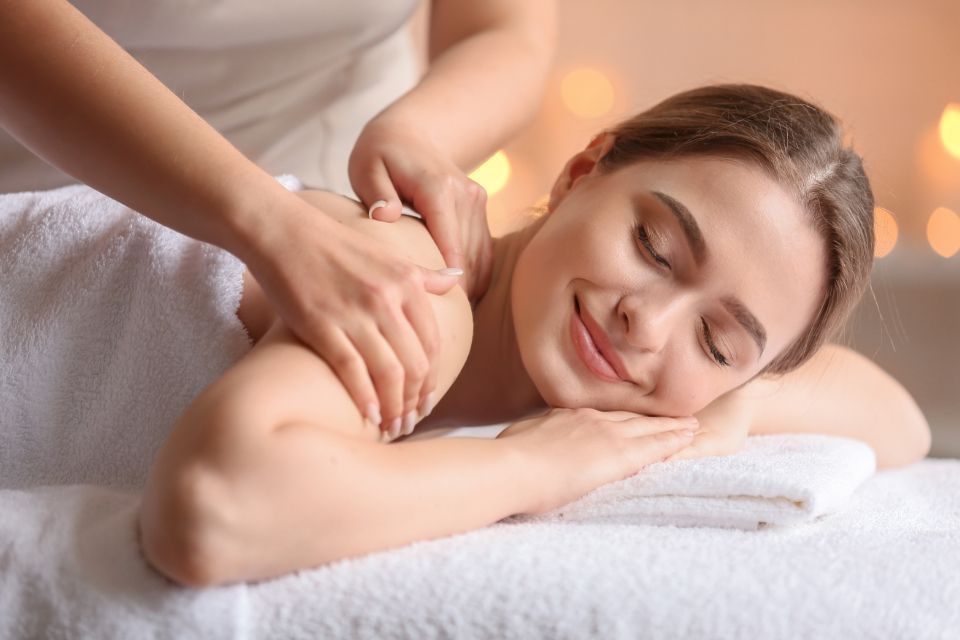
Massage is one of the better-supported items on any spa menu, at least for short-term relief. It also has a few safety rules that apply to more people than you might expect.
The evidence in brief
- Research suggests massage can ease some kinds of pain, including low back and neck pain, and reduce anxiety, but the benefits tend to be short-term.
- It’s low-risk with a trained therapist. Mention it first if you’re pregnant, take blood thinners, have had a blood clot, or have osteoporosis, cancer or a recent injury.
- Licensing rules vary by state; where a license is required, you can usually look it up on the state board’s website.
- The idea that massage flushes out toxins or lactic acid isn’t supported by research.
Unlike a lot of wellness trends, massage has been studied for decades, in settings from back pain clinics to cancer centers. The findings are mostly positive, with one big qualifier: relief usually lasts days or weeks, not months. That’s still worth something, as long as you know what you’re paying for.
What massage may help
The National Center for Complementary and Integrative Health describes much of the research as preliminary or mixed, but leaning toward benefits for:
- Low back pain. Short-term relief. The American College of Physicians includes massage among the non-drug options it recommends trying first for recent low back pain.
- Neck pain. Short-term improvement in some studies.
- Anxiety and stress. People often report feeling calmer, and some studies measure lower anxiety afterward.
- Symptoms of cancer and its treatment. Many cancer centers offer massage to help with pain, anxiety and fatigue, alongside medical care.
- Muscle soreness after exercise. Some evidence it reduces how sore people feel.
What it doesn’t do: “flush toxins” or clear lactic acid from your muscles. Those explanations are popular in spas but haven’t held up in research. Drinking water after a massage is fine, but it isn’t washing anything out.
Tell your therapist first
A good therapist will ask about your health before you get on the table. Bring these up even if they don’t:
| If you have… | Why it matters |
|---|---|
| Pregnancy | Positioning and some techniques need adjusting; check with your provider, especially in a high-risk pregnancy |
| A current or past blood clot | Pressure on the area could dislodge a clot |
| Blood thinners or a bleeding disorder | Deep pressure can cause bruising |
| Osteoporosis | Deep pressure could, rarely, injure fragile bones |
| Cancer | Direct pressure over tumors or areas getting radiation is usually avoided; ask your care team |
| A recent injury, surgery, wound or skin infection | The area should be avoided until it heals |
Safety first
Swelling, warmth and pain in one leg, especially the calf, can be a sign of a blood clot. Don’t massage it. See a doctor promptly.
Choosing a therapist
Check the license. Most states require massage therapists to be licensed, which usually means finishing an approved training program and passing an exam. Many states use the national MBLEx exam. Your state’s massage or health licensing board typically has an online lookup.
Match the setting to the goal. A spa massage is great for relaxation. For an injury or a medical condition, look for a therapist with experience in that area, or ask your doctor or physical therapist for a referral.
Expect professional boundaries. A legitimate therapist asks about your health, explains what they plan to do, keeps you covered except for the area being worked on and stops whenever you ask.
Check your benefits. If a doctor recommends massage to treat a specific medical condition, it may be eligible for HSA or FSA funds. Ask your plan what documentation it needs.
Getting the most from a session
- Arrive a few minutes early with a list of your health conditions and medications.
- Say what you want: relaxation, or work on a particular area.
- Speak up about pressure, temperature or anything that feels wrong.
- Notice how you feel over the next few days, and book again only if it genuinely helped.
Massage often sits alongside heat and cold on spa menus. Our guides to saunas and cold plunges cover the safety rules for each.
Asked and answered
Is it normal to be sore afterward?
Mild soreness for a day or two can follow deep pressure. Sharp pain, numbness or soreness that gets worse instead of better is worth mentioning to a doctor.
Does a harder massage work better?
Not necessarily. Pressure that makes you tense up or hold your breath is too much, and you can ask the therapist to ease off at any point.
Are massage guns safe to use at home?
Used gently on large muscles, they’re fine for most people. Keep them off bony areas, the front and sides of the neck, injuries and numb areas, and check with a doctor first if you have a bleeding disorder or take blood thinners.
This guide is general information, not medical advice. Check with your doctor or pharmacist before starting a supplement, device or treatment, especially if you’re pregnant, take medicines or have a health condition.